
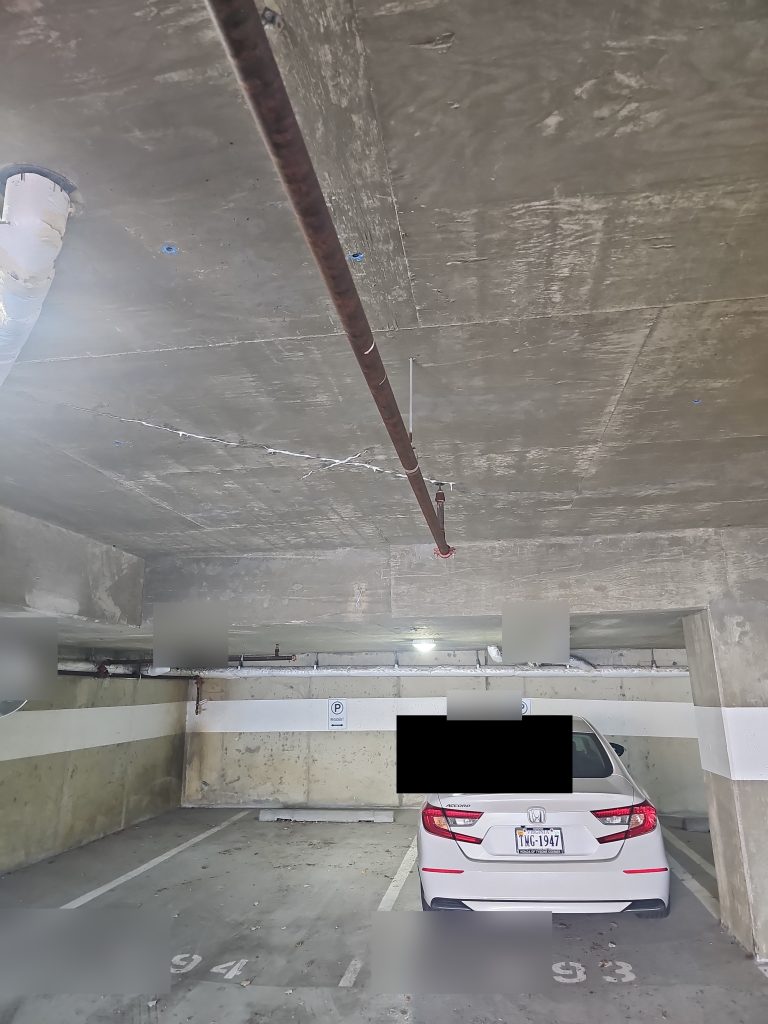
Parking garages are consistently one of the most difficult environments to cover with cameras. The structure creates natural blind spots, lighting varies dramatically by level and time of day, and the columns that hold the building up also block sightlines in exactly the wrong places. Getting coverage right requires planning before any hardware is ordered, not after the cameras are already mounted.
This post covers what goes into a proper parking garage camera installation, based on work we did at a 200-unit condominium in Arlington, Virginia.
Why Garages Are Different
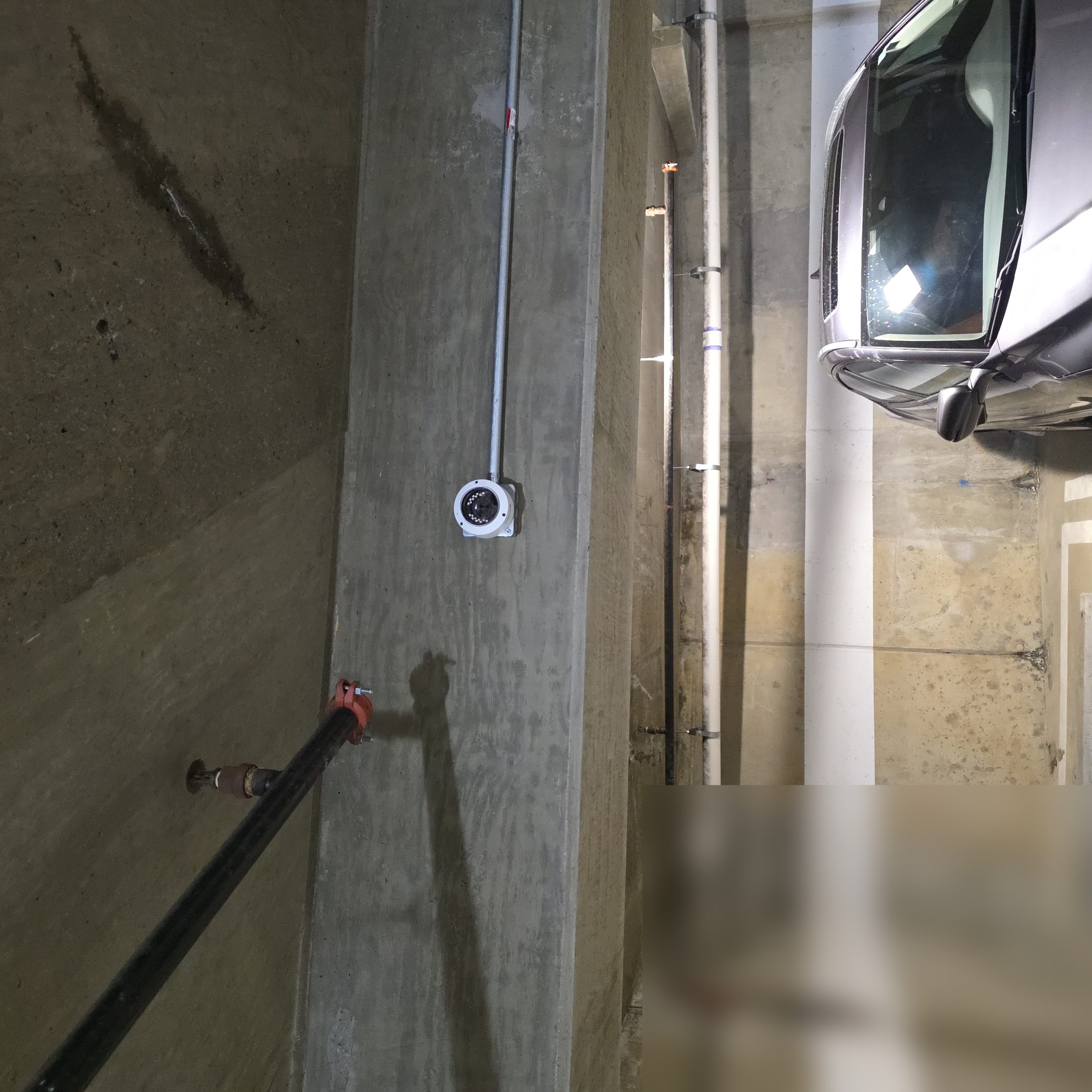
An office hallway is a controlled environment: defined width, consistent lighting, a single direction of travel. A parking garage is the opposite. Vehicles create obstructions that move. Columns divide the space into zones that each need separate coverage. Ramps between levels create angles that a flat-mounted camera will miss entirely. And the areas around access doors, staircases, and elevator lobbies need closer attention than the open parking lanes.
Most installers treat a parking garage like any other space: mount cameras at regular intervals and call it done. That approach produces gaps, and gaps in a garage are exactly where incidents tend to happen.
Planning Fields of View Before Installation
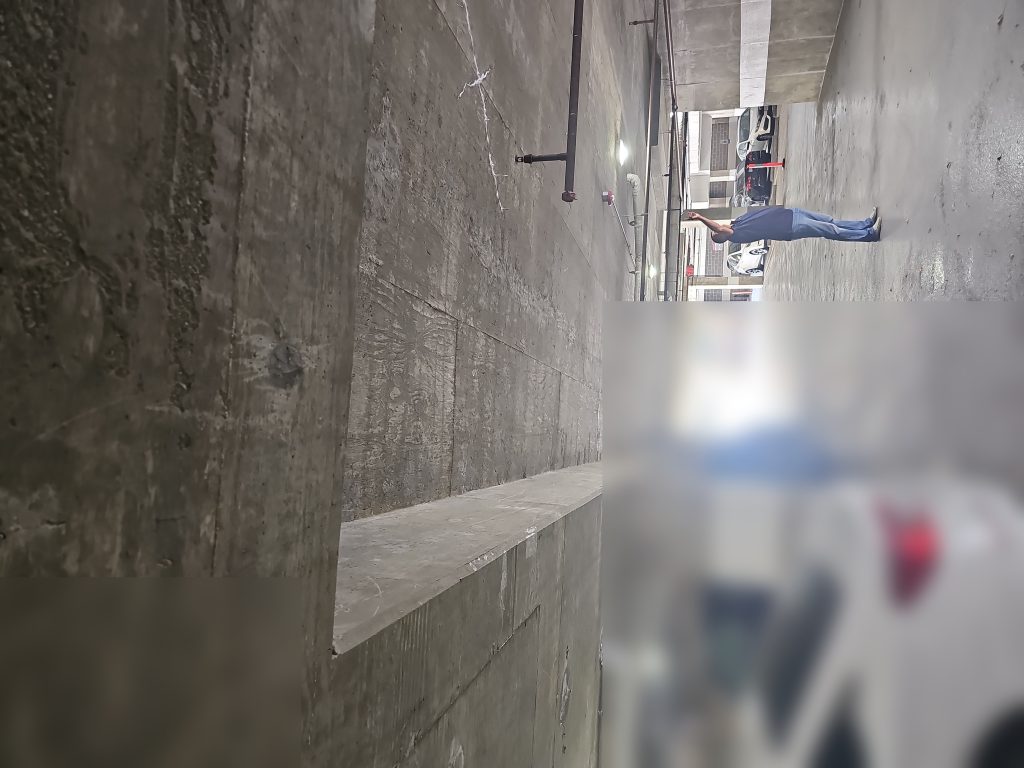
The first step is a site walk to map the space. We identify every column, every access point, every dead zone where a camera positioned elsewhere will not reach. We note the lighting at each location, because a camera aimed into low-light conditions at the back of a structure will produce poor footage even if it is technically covering the area.
From that walkthrough, we develop a camera layout where the fields of view overlap. No camera in the final plan is the only device watching its zone. If one camera is obstructed by a vehicle or experiences a hardware issue, the neighboring cameras still have coverage of that area.
At the Arlington property, this planning process was essential for placing 39 cameras effectively across the full building and garage. Getting 39 cameras positioned correctly requires a layout plan, not just a walk with a tape measure.
EMT Conduit in Garage Environments
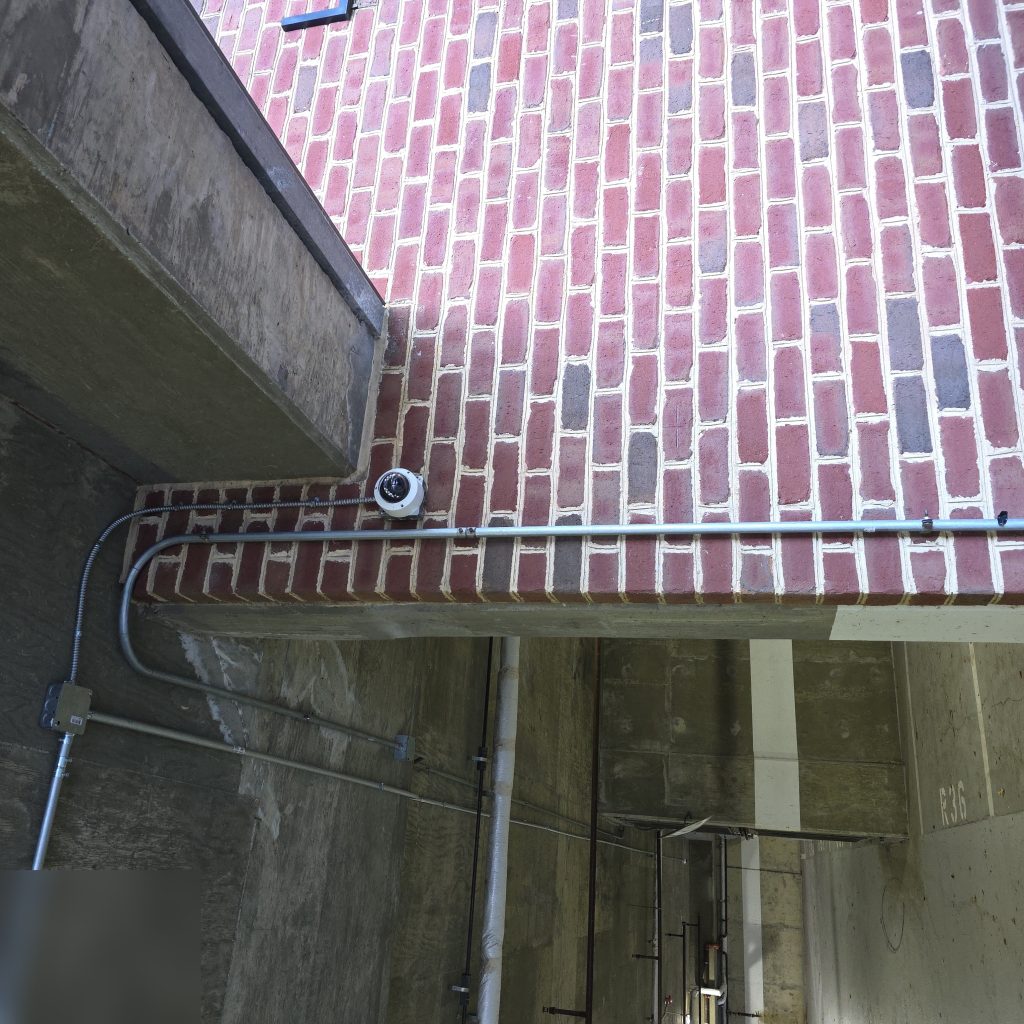
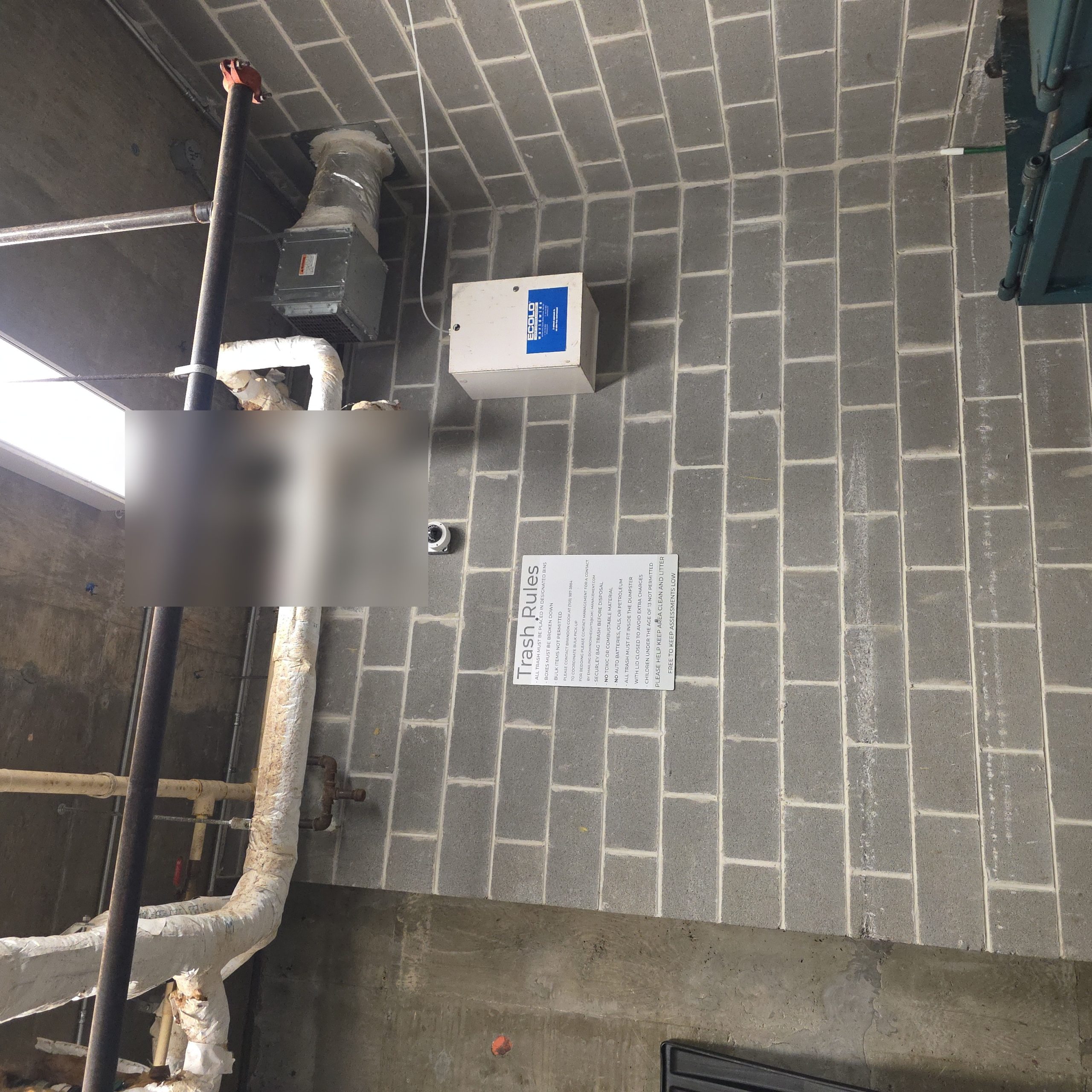
Parking garages expose cabling to conditions that interior spaces do not: moisture, exhaust, physical contact from vehicles, and in some cases, temperature swings. Running camera cable in EMT conduit is not optional in these environments. EMT protects the cable from damage, provides a grounded metal pathway, and meets the code requirements for commercial installations.
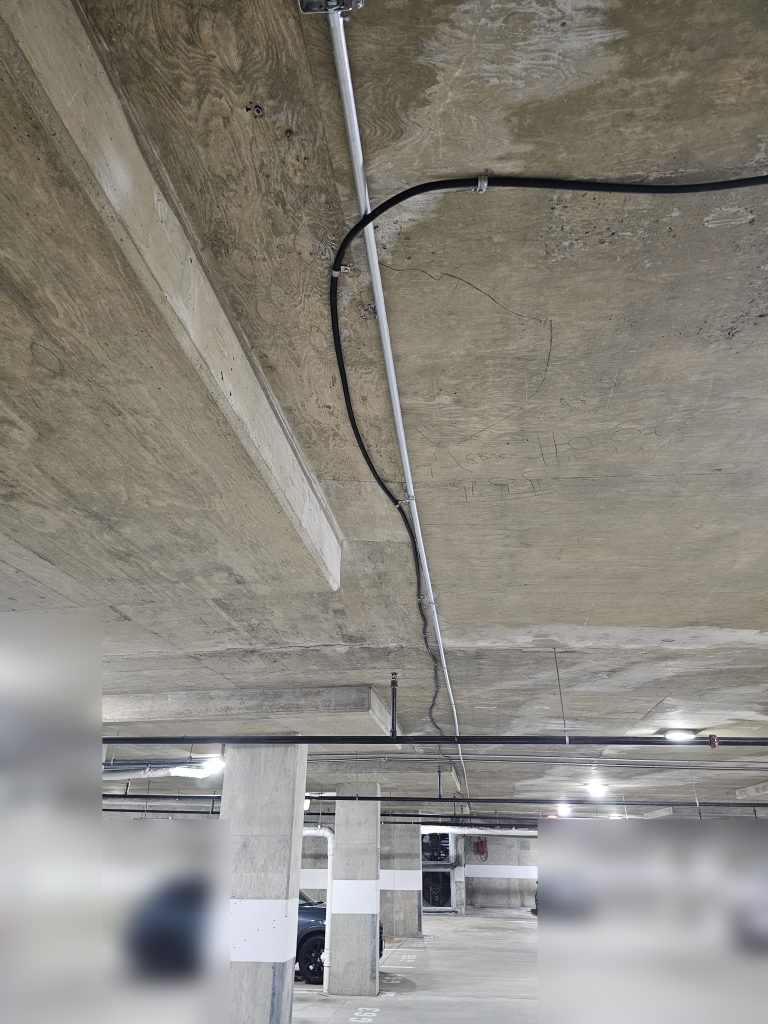
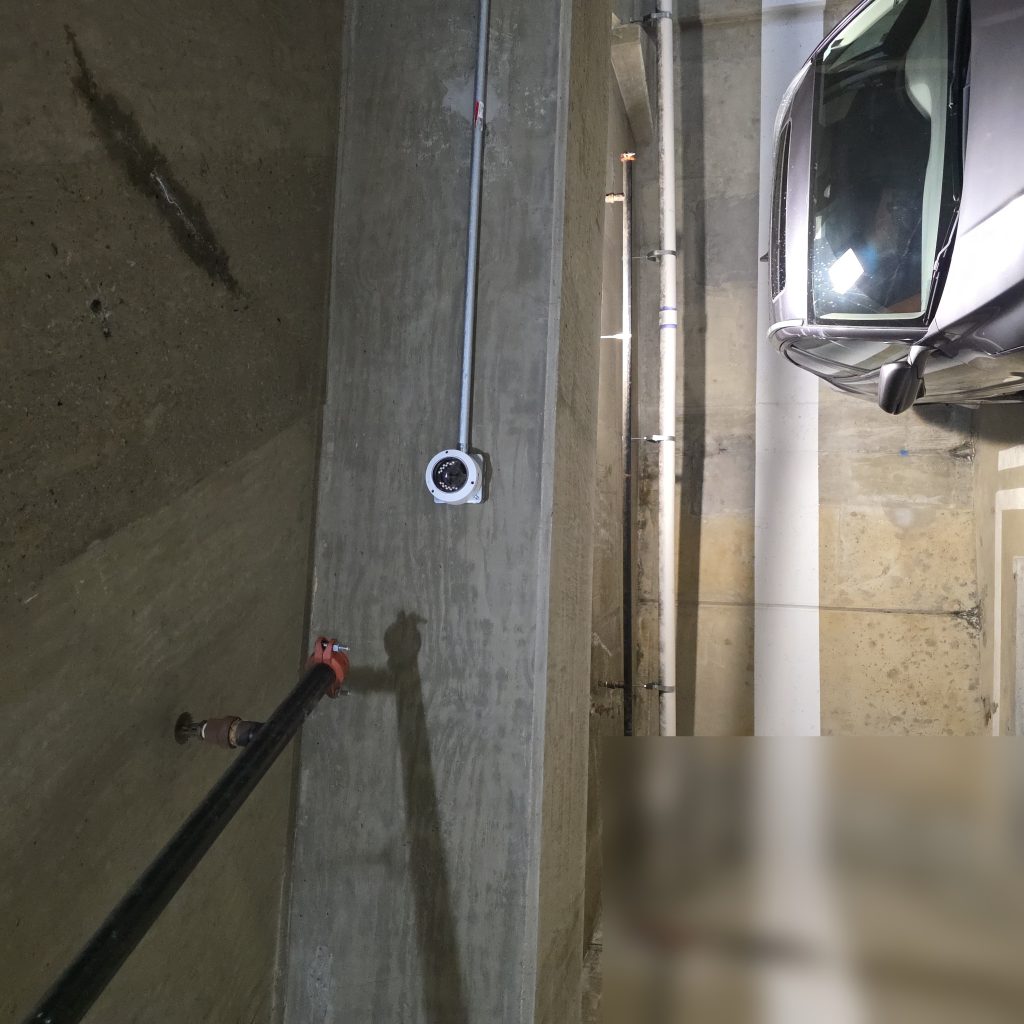
At this property, all conduit runs throughout the building and garage are EMT. The runs were planned before any conduit was installed, so the paths follow the structure logically: along ceiling channels, down columns to camera mounting positions, and back to the camera gateways.
Clean conduit runs also matter for long-term serviceability. When a camera needs to be replaced or a cable needs to be traced, a logical conduit layout makes that work straightforward. Conduit that was installed without a plan creates a mess that slows down every future service visit.
Camera Gateways and Network Distribution
With 39 cameras across one building, running all the traffic back to a single network switch is not the right approach. The camera load needs to be distributed to keep latency low and avoid overloading any single device.
This project used 4 camera gateways distributed throughout the building to handle that load, feeding back to 2 Ubiquiti 48-port PoE switches. Distributing the gateways means shorter cable runs to each camera, less signal degradation, and a more resilient network. If one gateway has an issue, the rest of the cameras stay online.
The PoE switches power cameras through the same cable that carries video, which simplifies installation and eliminates the need for separate power drops at each camera location.
Coverage That Actually Works
The goal of a parking garage camera installation is not to have cameras. It is to have coverage. Those are not the same thing. A garage with six cameras pointed at the wrong locations has less useful coverage than a garage with three cameras positioned correctly.
When we finish a project, management can pull up any point in the garage on the camera system and see clear footage with no dead zones. That is the outcome that makes the installation worth the investment.
If you manage a property with a parking garage and want to understand what proper coverage would look like, we offer free site walks throughout the DC metro area. We will walk the space, document what you have, and show you where the gaps are.
See our Arlington, VA security page or our Bethesda, MD page for more about our work in the region. We also serve Silver Spring, MD and surrounding communities.
Schedule a free site walk or call 301-363-7347. Innovative Developments LLC is licensed in Maryland, Virginia, DC, Delaware, and Pennsylvania.